Universal Research Laboratory

Uncategorized

Water and Environmental Testing Laboratory

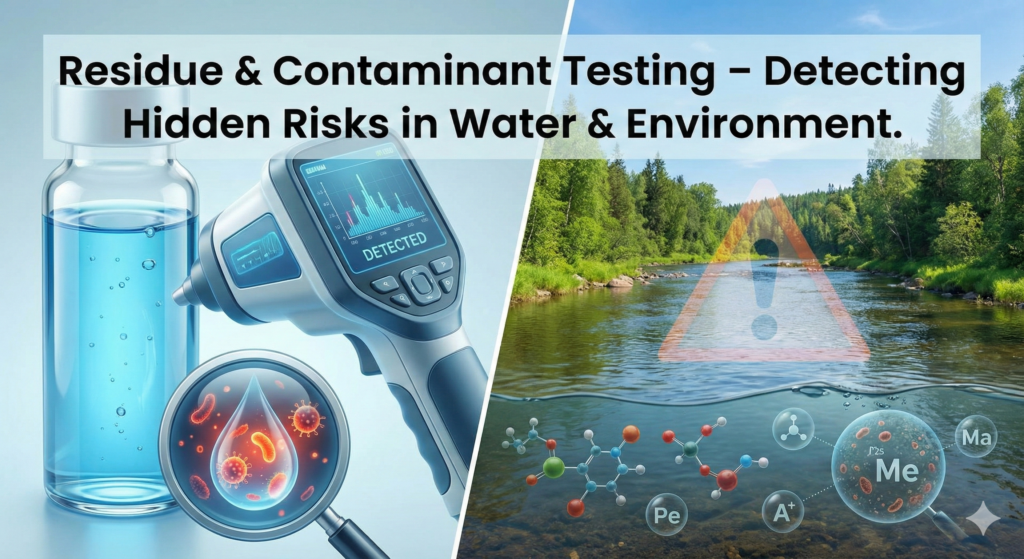
Residue & Contaminant Testing – Detecting Hidden Risks in Water & Environment

Water sources today are vulnerable to trace-level contaminants that pose significant long-term health risks. A Water and Environmental Testing Laboratory performs specialized residue testing for: Residue testing is crucial for: Even small concentrations of these contaminants can significantly impact human health and ecosystems. Regular testing helps detect contamination early and supports effective corrective actions.

Residue & Contaminant Testing – Detecting Hidden Risks in Water & Environment Read More »
Water and Environmental Testing Laboratory

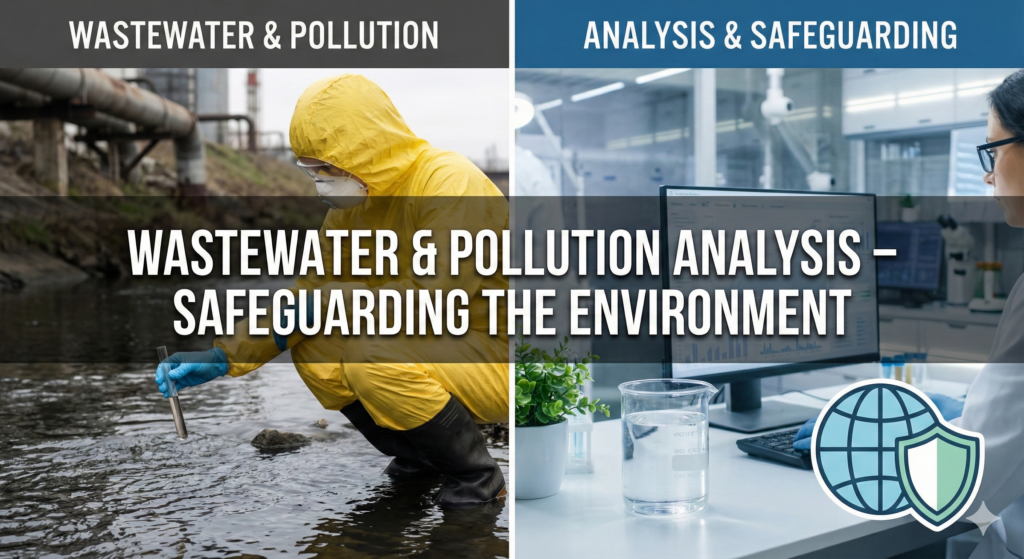
Wastewater & Pollution Analysis – Safeguarding the Environment

Wastewater carries a complex mix of organic and inorganic contaminants. A Water and Environmental Testing Laboratory provides scientific testing for sewage water, effluent, STP feed water, STP treated water, sludge, slurry, biosolids, and leachate. Pollution analysis includes: Industries rely on wastewater testing for: Scientific wastewater analysis is essential to protect rivers, lakes, soil, and groundwater

Wastewater & Pollution Analysis – Safeguarding the Environment Read More »

Water and Environmental Testing Laboratory

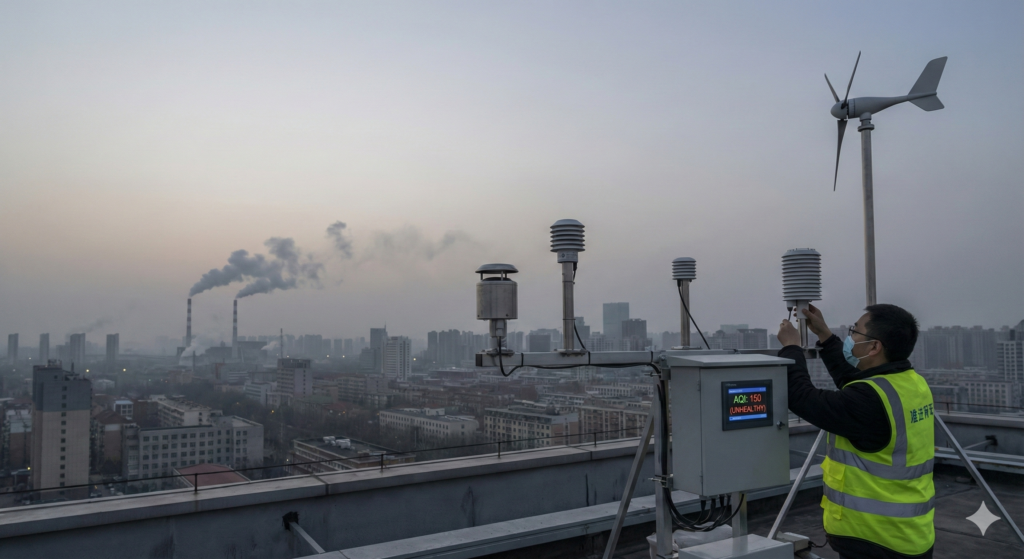
Atmospheric Pollution Testing – Monitoring the Air We Breathe

Air pollution is one of the biggest environmental hazards today. A Water and Environmental Testing Laboratory performs comprehensive atmospheric pollution testing to evaluate ambient air quality, indoor/workzone air quality, ambient noise, indoor noise, source noise, lux index, and stack emissions. Key areas of atmospheric testing include: Industries use this data to comply with CPCB regulations,

Atmospheric Pollution Testing – Monitoring the Air We Breathe Read More »

Water and Environmental Testing Laboratory

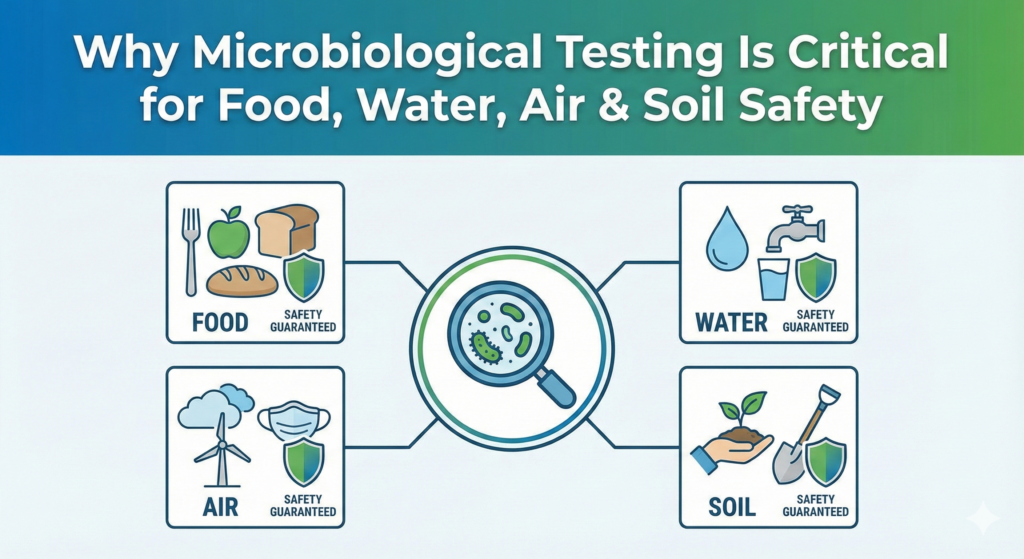
Why Microbiological Testing Is Critical for Food, Water, Air & Soil Safety

Microbial contamination is one of the biggest threats to human health and industry quality standards. A Water and Environmental Testing Laboratory conducts detailed microbiological analysis across food, water, air, and soil samples. Common microbial contaminants include:E.coli, Salmonella, Shigella, Pseudomonas, Vibrio cholerae, Staphylococcus, Streptococcus, Clostridium, Legionella pneumophila, yeasts & moulds, Candida, Aspergillus niger, total fungal count,

Why Microbiological Testing Is Critical for Food, Water, Air & Soil Safety Read More »

Water and Environmental Testing Laboratory

Soil, Fertilizer & Biosolid Testing – The Foundation of Sustainable Agriculture

Healthy soil is the backbone of agricultural productivity. A Water and Environmental Testing Laboratory provides scientific soil testing to measure macro & micro nutrients, soil health indicators, organic matter, contaminants, and physical properties. Farmers, agronomists, and fertilizer manufacturers rely on soil testing to understand: Fertilizer testing helps verify nutrient composition in organic fertilizers (compost, vermicompost)

Soil, Fertilizer & Biosolid Testing – The Foundation of Sustainable Agriculture Read More »

Water and Environmental Testing Laboratory

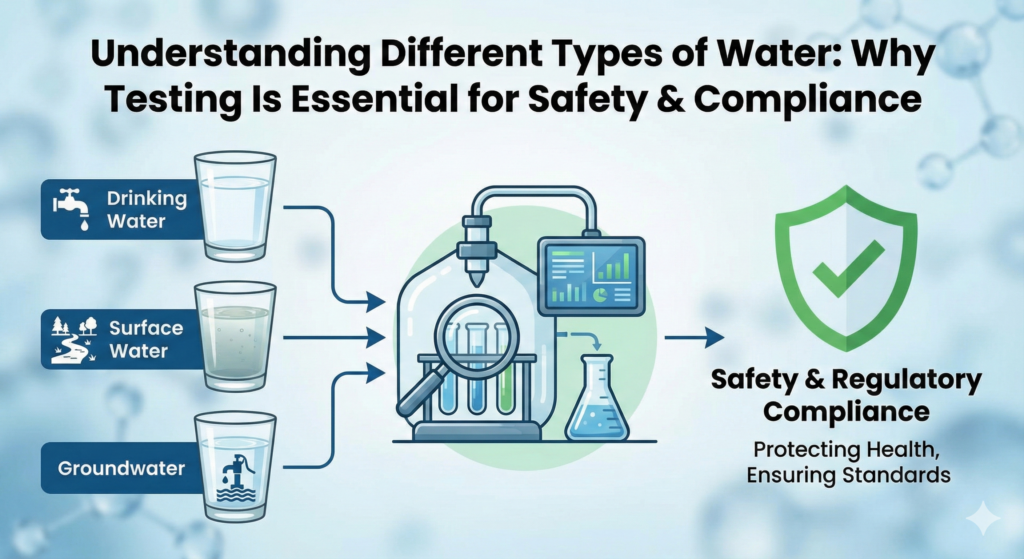
Understanding Different Types of Water: Why Testing Is Essential for Safety & Compliance

Water quality varies drastically depending on its source and treatment. A Water and Environmental Testing Laboratory performs detailed analysis for various water categories such as drinking water, groundwater, borewell water, surface water, RO water, industrial water, packaged drinking water, swimming pool water, irrigation water, and more. Each water type has unique risks: Regular water testing

Understanding Different Types of Water: Why Testing Is Essential for Safety & Compliance Read More »

Water and Environmental Testing Laboratory

Why Choosing a NABL-Accredited Water and Environmental Testing Laboratory Matters

Ensuring the safety of water, soil, and environmental resources has become more important than ever. With rising pollution levels, industrial discharges, agricultural chemicals, and urban development, scientific testing is the only way to verify environmental quality. This is where a NABL-accredited Water and Environmental Testing Laboratory plays a critical role. NABL accreditation (ISO/IEC 17025:2017) assures

Why Choosing a NABL-Accredited Water and Environmental Testing Laboratory Matters Read More »